Showing posts with label Cartoon. Show all posts

Wednesday, March 16, 2011

Ganesha Cartoon Movie Design Animation


Ganesha Cartoon Movie Design Animation
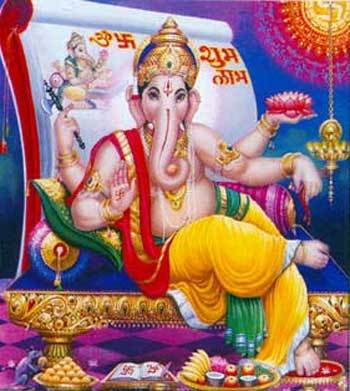
The story of Lord Ganesh, the elephant-faced god of success and destroyer of obstacles is full of interest and appeal to the young. The anecdotes connected with this god of education, knowledge, wisdom and wealth are vividly animated in this video. Find out how Vinayaka, as he is called, came to have an elephant-head. You will learn that it is an outcome of his devotion to mother Parvati. Ganesh learns in another episode that he should harm no living creature. Parvati teaches him this moral when he plays with an ant. A great lesson for kids. Another interesting story is about Kroncha, who becomes the vehicle of Ganesh in the form of a sage is finally brought to his sense by Ganesh.

Another interesting story is about the formation of the river Cauvery with the help of Lord Ganesh. Learn how Kashi became the holy of Lord Ganesh. Learn how Kashi became the holy city after the killing of Durasana. Find out how Ganesh tests and blesses a mother and her daughter who are his devotees. The beautifully animated anecdotes of Lord Ganesh will captivate kids and make them learn many excellent values.

India and Hinduism had an impact on many countries of East and South Asia as a result of commercial and cultural contacts. Ganesha is one of many Hindu deities who reached foreign lands as a result. The worship of Ganesha by Hindus outside of India shows regional variation. The acceptance of Hindu ideas in ancient times still continue today in world religions.

Ganesha was a deity particularly worshipped by traders and merchants, who went out of India for commercial ventures. The period from approximately the tenth century onwards was marked by the development of new networks of exchange, the formation of trade guilds, and a resurgence of money circulation, and it was during this time that Ganesha became the principal deity associated with traders. The earliest inscription where Ganesha is invoked before any other deity is by the merchant community.

Ninja Child Hattori Cartoon Fanny Image


Ninja Child Hattori Cartoon Fanny Image
Ninja Hattori-kun is a manga series by Fujiko Fujio, later adapted into an anime series, a video game and eventually a live-action movie.

Ninja Hattori-kun
Genre Action, adventure, comedy, martial arts Manga
Author Fujiko Fujio
Publisher Shogakukan
Demographic Shōnen
Magazine Shōnen Sunday
Director Shoichi Shimazu
Writer Hisashi Inoue
Studio Hiro'oki Ogawa (1st season)
Akira Yuyama (2nd season)
Network TV Asahi
Original run 1966 – 1968

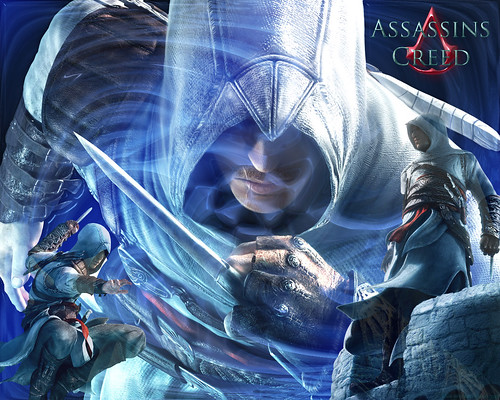
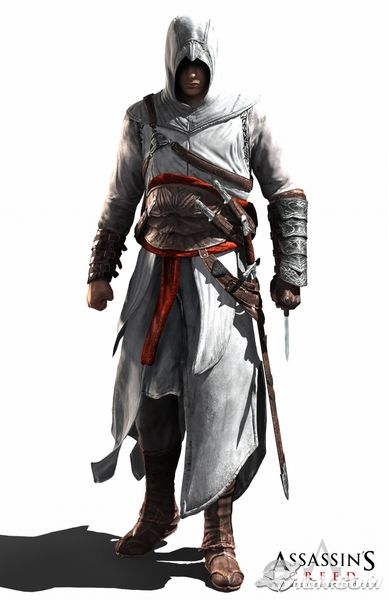
Ninja Assassins Creed Animation Image


Ninja Assassins Creed Animation Image
Assassin's Creed is a historical fantasy third person action-adventure/science fiction video game developed by Ubisoft Montreal and published by Ubisoft. It was released worldwide in November 2007 on the PlayStation 3 and Xbox 360, and April 2008 for PCs. The game centers on the use of a machine named the "Animus", which allows the viewing of the protagonist's genetic memories of his ancestors.

Through this plot device, details emerge of a struggle between two factions, the Knights Templar and the Assassins (Hashshashin), over an artifact known as a "Piece of Eden" and the game primarily takes place during the Third Crusade in the Holy Land in 1191. The game received generally positive reviews, and won several awards at E3 in 2006. A sequel, Assassin's Creed II, was released in November 2009. n September 2012, bartender Desmond Miles is kidnapped by Abstergo, a pharmaceutical company. He is to be used as a 17th test subject in the Animus, a device that can read the memories of Desmond's ancestors through the "genetic memory" left behind in their descendants' DNA. Desmond can then simulate the experiences of his ancestors in a virtual reality environment. Abstergo intends to put Desmond in the device to simulate the memories of one particular ancestor, Altaïr ibn La-Ahad, a member of a clan of Assassins.

The character of Al Mualim and his clan are based on an Islamic sect known as the Order of the Hashshashin from which the term assassin originates. The Assassins follow a strict code of honor called the "Assassin's Creed", which consists of three basic rules. Do not compromise the Brotherhood. They also follow the famous rule of Hashshashin founder Hassan-i Sabbah: "Nothing is true; everything is permitted".

Aladdin Cartoon Arabian Animation Series


Aladdin Cartoon Arabian Animation Series
Aladdin is a 1992 American animated adventure film produced by Walt Disney Feature Animation and released by Walt Disney Pictures. Aladdin was the 31st animated feature in the Walt Disney Animated Classics series, and was part of the Disney film era known as the Disney Renaissance. The film was directed by John Musker and Ron Clements, and is based on the Arab folktale of Aladdin and the magic lamp from One Thousand and One Nights. The voice cast features Scott Weinger, Jonathan Freeman, Robin Williams, Linda Larkin, Frank Welker, Gilbert Gottfried, and Douglas Seale.

Lyricist Howard Ashman first pitched the idea, and the screenplay had to go through three drafts before Disney president Jeffrey Katzenberg greenlighted the production. The animators based their designs on the work of caricaturist Al Hirschfeld, and computers were used for both colouring and creating some animated elements. The musical score was written by Alan Menken and features six songs with lyrics written by both Ashman and Tim Rice, who took over after the former's death.

Original theatrical poster; art by John Alvin
Directed by Ron Clements
John Musker
Produced by Ron Clements
John Musker
Written by Ron Clements
John Musker
Ted Elliott
Terry Rossio
Starring Scott Weinger
Jonathan Freeman
Robin Williams
Linda Larkin
Frank Welker
Gilbert Gottfried
Douglas Seale
Music by Alan Menken
Howard Ashman
Tim Rice
Editing by Mark A. Hester
H. Lee Peterson
Studio Walt Disney Animation Studios
Distributed by Walt Disney Pictures
Release date(s) November 25, 1992 (1992-11-25)
Running time 90 minutes
Country United States
Language English

Friday, March 11, 2011

Full Metal Panic Cartoon Anime Series


Full Metal Panic Cartoon Anime Series
Full Metal Panic!, Furumetaru Panikku!?, often abbreviated to FMP!) is an ongoing series of light novels written by Shoji Gatoh and illustrated by Shiki Douji. The series follows Sousuke Sagara, a member of the covert anti-terrorist private military organization known as Mithril, tasked with protecting Kaname Chidori, a spirited Japanese high school girl.

Individual chapters are published on Monthly Dragon Magazine, followed by a paperback compilation released by Fujimi Shobo's Fujimi Fantasia Bunko. The novels are split between stories focusing on Sousuke's mission as a soldier of Mithril and comedic side stories centered on his life at Jindai High School.

The series has been adapted into different media; including three animated television series: Full Metal Panic! by Gonzo in 2002, Full Metal Panic? Fumoffu and Full Metal Panic! The Second Raid by Kyoto Animation in 2003 and 2005 respectively. An OVA was also released in 2006; and five different manga series.

A live action film adaptation was announced by Mandalay Pictures in April 2009, with Zac Efron rumored to be attached to the project. Efron has since confirmed a meeting took place regarding the project but added that the adaptation was unlikely to happen.

Wednesday, March 9, 2011

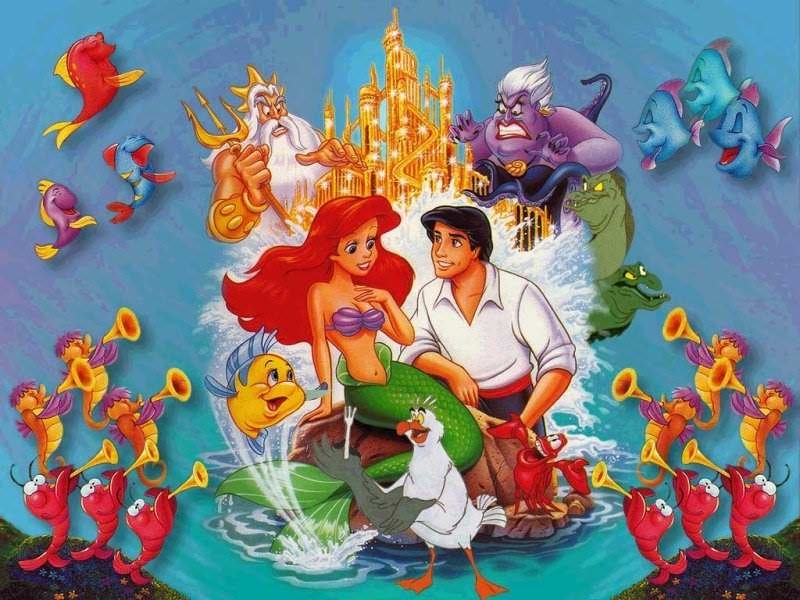
The Little Mermaid Disney Cartoon Animated Design


The Little Mermaid Disney Cartoon Animated Design
The Little Mermaid is a 1989 American animated film produced by Walt Disney Feature Animation and based on the Hans Christian Andersen fairy tale of the same name. Distributed by Walt Disney Pictures, the film was originally released to theaters on November 17, 1989 and is the twenty-eighth film in the Walt Disney Animated Classics series, and the first of the Disney Renaissance.

After the success of the 1988 Disney/Amblin film Who Framed Roger Rabbit, The Little Mermaid is given credit for breathing life back into the animated feature film genre after a string of critical or commercial failures that dated back to the early 1980s. It also marked the start of the era known as the Disney Renaissance. A stage adaptation of the film with a book by Doug Wright and additional songs by Alan Menken and new lyricist Glenn Slater opened in Denver in July 2007 and began performances on Broadway.

Triton appears and confronts Ursula, but cannot destroy Ursula's contract with Ariel. Triton chooses to sacrifice himself for his daughter, and is transformed into a polyp. Ursula takes Triton's crown and trident, which was her plan from the beginning. Ursula uses her new power to gloat, transforming into a giant, and forming a whirlpool that disturbs several shipwrecks to the surface, one of which Eric commandeers. Just as Ursula is set to use the trident to destroy Ariel, Eric turns the wheel hard to port and runs Ursula through the abdomen with the ship's splintered bowsprit, mortally wounding her. With her last breaths, Ursula pulls the ship down with her, but Eric escapes to shore in time.

With Ursula gone, her power breaks and the polyps in Ursula's garden (including Triton) turn back into the old merpeople. Later, after seeing that Ariel really loves Eric and that Eric also saved him in the process, Triton willingly changes her from a mermaid into a human using his trident. She runs into Eric's arms, and the two finally kiss. In the final scene, an unspecified amount of time later, Ariel marries Eric in a wedding where both humans and merpeople attend.

Tuesday, March 8, 2011

Wall Disney Princess Cartoon Design


Wall Disney Princess Cartoon Design
The perfect place to practice a waltz, not to mention trying on all those glass slippers. If you are creating a chair rail with paint, paint that first. Mark five sections with a pencil across the wall 1/3 high. Tape a string at one end of the wall and overly it on the pencil marks stretching it horizontally to the other end of the wall and tape. Stand back and visual review the string line to make sure it's straight. Adjust line if necessary. Using the string as a guide, align painters tape across the wall. Repeat the instructions 3 inches below the tape line.

Then use the Disney Princess Stencil from Imperial in CINDERELLAS BALL GOWN to create the pattern within the rectangles. To do so mark, mark the center of the panels, paint one stencil length. Then, depending on available space, add full or partial stencil lengths on either side of the center stencil. Add one stencil on top and below the center stencil.

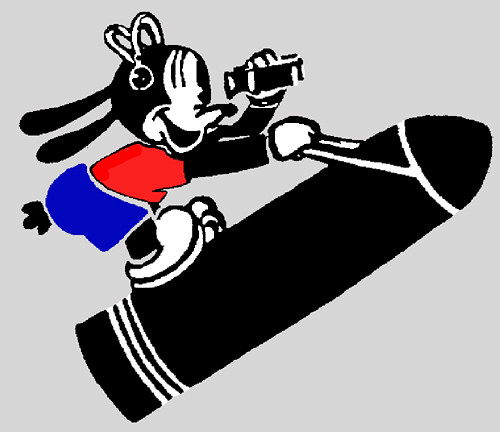
Oswald the Lucky Rabbit Cartoon Disney


Oswald the Lucky Rabbit Cartoon Disney
Oswald was a character the Disney Studios created after Alice Comedies had run its course. The rabbit starred in a series of 26 animated black & white silent shorts (that were shown in major theaters with first-run movies) between 1927 and 1928. He also was the first Disney character to generate merchandise: a chocolate-covered marshmallow candy bar, a stencil set, and a pin-backed button. The idea for this character came about when Disney's film distributor Charles Mintz (who was now married to Alice distributor Margaret Winkler) suggested a change in direction to keep his animated shorts fresh.

Oswald the Lucky Rabbit is an anthropomorphic rabbit animated cartoon character created by Ub Iwerks and Walt Disney for films distributed by Universal Pictures in the 1920s and 1930s. The majority rights to the character are currently held by The Walt Disney Company, with a few rights going to Universal. In February 2006, a number of minor assets including the rights to Oswald were acquired by the Walt Disney Company from NBC Universal as part of a deal that sent sportscaster Al Michaels from Disney’s ABC and ESPN to NBC Sports. At the time, ABC had lost its contract for NFL broadcast rights, and despite recently signing a long-term contract with ESPN, Michaels was interested in rejoining broadcast partner John Madden at NBC for the Sunday night package. Universal transferred the copyright in a cartoon character to Disney, and in exchange, Disney released Michaels from his employment contract, allowing him to sign with NBC.

The deal includes the rights to the character and the original 26 short films made by Disney (namely, most of the Oswald films produced from 1927 to 1928). Rights to the Lantz/Universal-produced Oswald films and other related products were not included, and therefore Oswald appears in both Disney releases and in Universal’s Woody Woodpecker and Friends collection. In January 2007, a T-shirt line from Comme de Garçon seems to have constituted the first new Disney Oswald merchandise. Following in December was a two-disc DVD set, The Adventures of Oswald the Lucky Rabbit, included in Wave Seven of the Walt Disney Treasures series. Several Oswald collectors’ figurines and a stuffed animal appeared shortly after the DVD set’s release. The Disney Store has also begun to introduce Oswald into its merchandise lines, including a canvas print and Christmas ornament that became available Fall 2007.


Mickey Mouse Wall Disney Cartoon Series


Mickey Mouse Wall Disney Cartoon Series
Mickey Mouse is a cartoon character who has become an icon for the Walt Disney Company. Mickey Mouse was created in 1928 by Walt Disney and Ub Iwerks and voiced by Walt Disney. The Walt Disney Company celebrates his birth as November 18, 1928 upon the release of Steamboat Willie, although Mickey had already appeared six months earlier in Plane Crazy (Steamboat Willie being the first Mickey Mouse Cartoon with sound). The anthropomorphic mouse has evolved from being simply a character in animated cartoons and comic strips to become one of the most recognizable symbols in the world. Mickey is currently the main character in the Disney Channel's Playhouse Disney series "Mickey Mouse Clubhouse". Mickey is the leader of The Mickey Mouse Club.

Mickey's top trademark is his ears, and they have also become a trademark of the Disney company in general. Basic design of Mickey's ears is two very round ears that are attached to a very round head. Other than the 1940s Mickey, he and Minnie's ears have had the unusual characteristic of always being viewable with the same symmetry despite which direction that their respective head is facing. In other words, the ears are always generally in the same position as they are in a frontal view of the character, and appear to be sideways on their head when facing left or right.

A large part of Mickey's screen persona is his famously shy, falsetto voice. From his first speaking role in The Karnival Kid onward, Mickey was voiced by Walt Disney himself, a task in which Disney took great personal pride. (Carl Stalling and Clarence Nash allegedly did some uncredited ADR for Mickey in a few early shorts as well.) However, by 1946, Disney was becoming too busy with running the studio to do regular voice work (and it is speculated his cigarette habit had damaged his voice over the years), and during the recording of the Mickey and the Beanstalk section of Fun and Fancy Free, Mickey's voice was handed over to veteran Disney musician and actor Jimmy MacDonald.
 
Themes by ASRock Cartoon Disney Pics - Privacy Policy - Sitemap